
Rites and social practice
The Shepherds’ Saint
The Feast of Saint Valentine in Fano Adriano
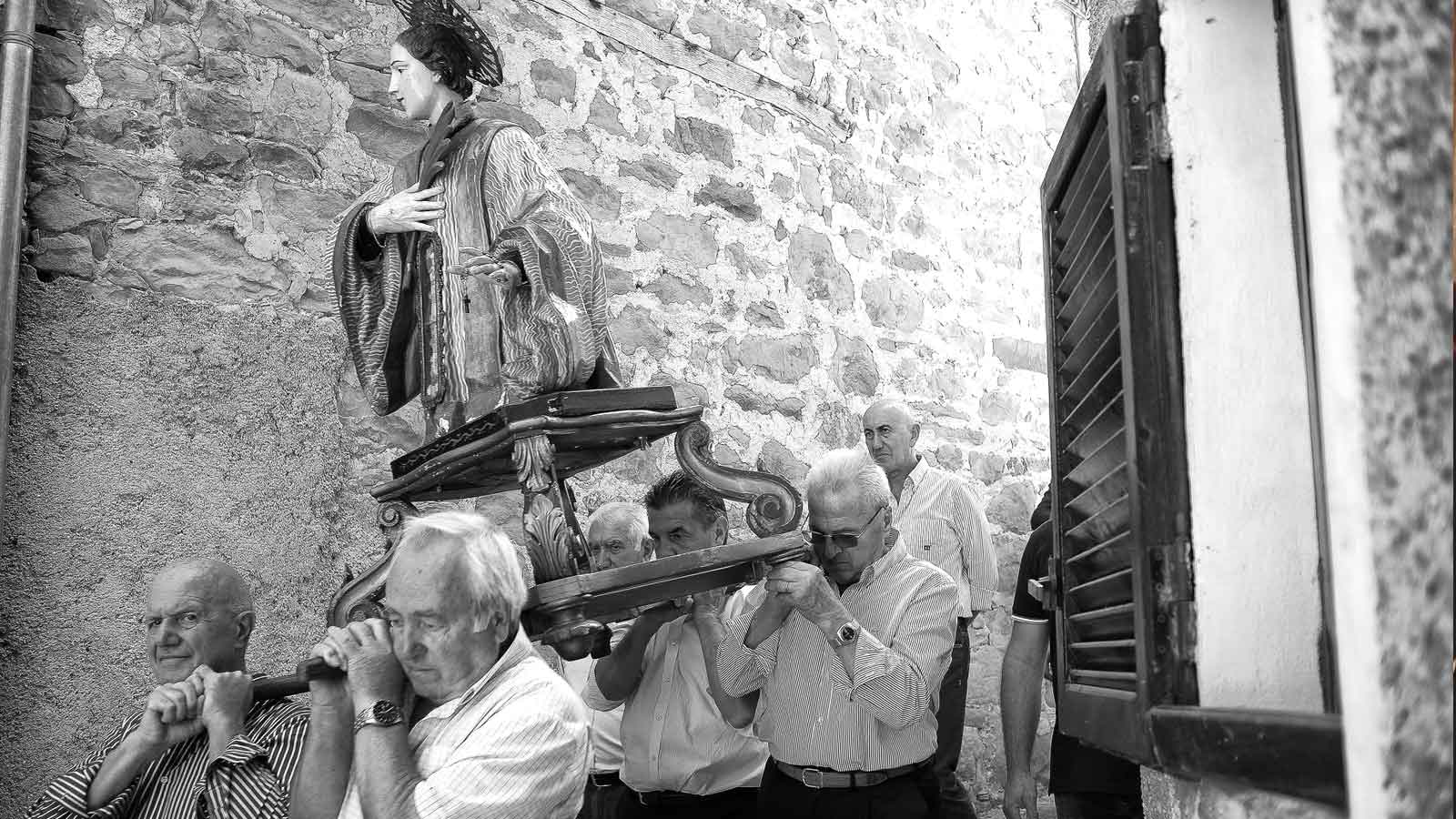
Twice a year, in the heart of winter and again as summer draws to a close, Fano Adriano gathers around its patron saint. The wooden statue of Saint Valentine Martyr leaves the parish church of Saints Peter and Paul. It is carried on the shoulders of devotees through the narrow streets of the village, while the band plays festive marches and the bells ring ad allegrezza from the bell tower, as the faithful line the procession route. The twofold rhythm of the celebration preserves, in its two annual dates, the memory of a community of transhumant shepherds who were far from home precisely when winter brought the feast of their protecting saint.
“As this was a community of transhumant shepherds, we celebrated him twice. The winter feast was held while only the mothers and children remained in the village. Then Saint Valentine was celebrated once again, with the whole family together, on the first Sunday of September. We have kept this tradition alive: today we celebrate Saint Valentine on his feast day, and then we celebrate him again on the last Sunday of August.”
Berardino Nisii, 14 February 2026
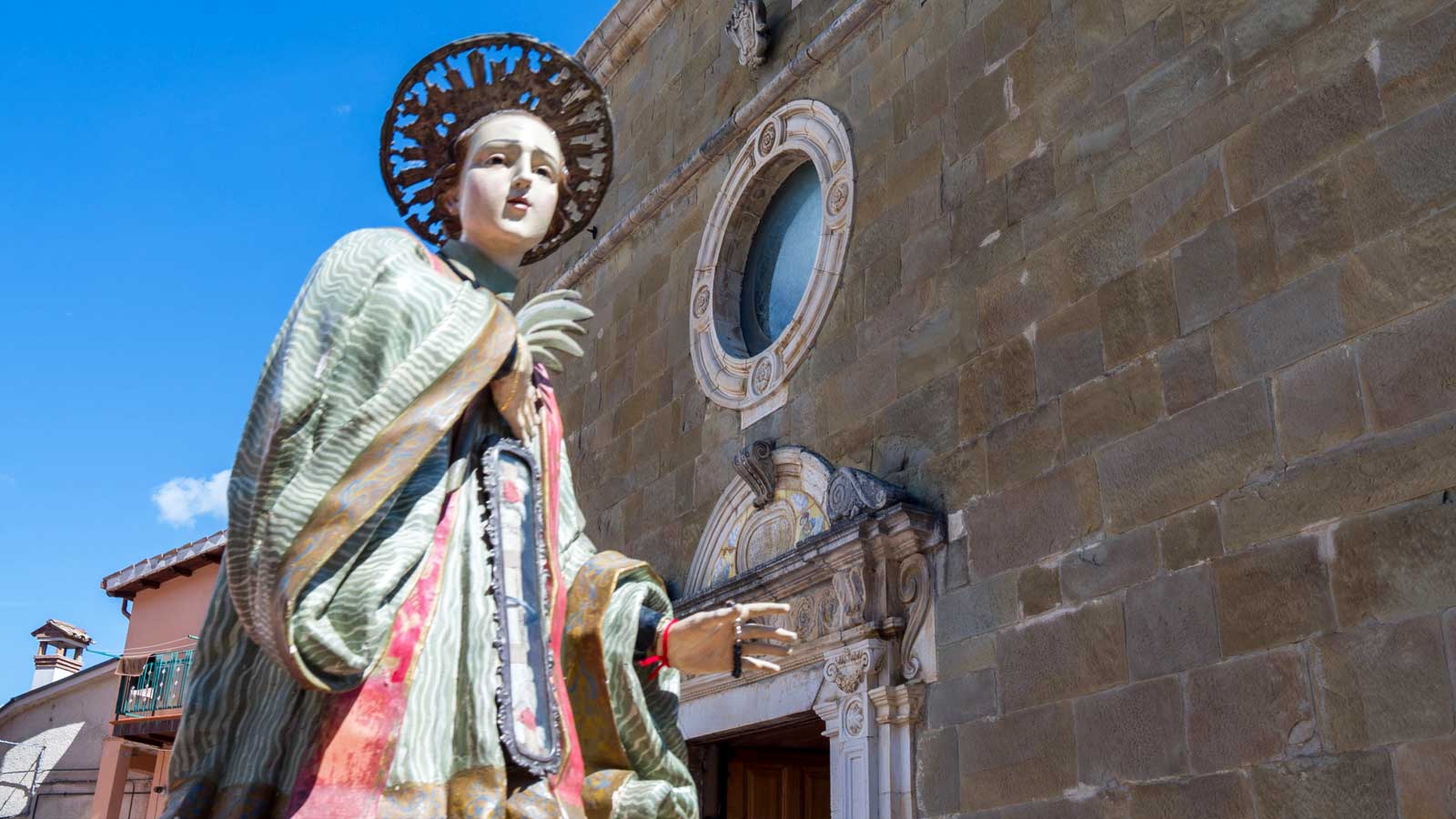
The Feast of Saint Valentine is the principal calendrical rite of community cohesion in Fano Adriano. At its centre stands the venerated image of the saint, a finely carved polychrome wooden statue carried in procession from the parish church of Saints Peter and Paul through the squares and narrow streets of the village, transforming everyday space into a ritual landscape marked by the music of the band and the bells ringing ad allegrezza from the seventeenth-century bell tower. Around the liturgical core of the celebration—the Mass and the procession—unfolds its civic and convivial dimension, reflecting the characteristic intertwining of the sacred and the secular found in patronal feasts throughout central and southern Italy. The celebration of the patron saint is at once an act of devotion and a means through which the community represents itself, in a festive language shaped and transformed over the centuries.
Its most distinctive feature is the duplication of festive time. Observed on the fixed date of 14 February, Saint Valentine’s feast falls in the heart of winter, when in the past only the settled part of the community remained in the village. The feast “for everyone” was therefore held again in summer, when shepherds and livestock owners were present, shortly before their next departure for the Roman Campagna: originally on the first Sunday of September, and today on the last Sunday of August. This double date is the most emblematic expression, embedded in the ceremonial calendar, of the transhumant economy that long shaped the social and occupational life of the village: a community divided between a settled and a mobile population, the latter engaged in livestock husbandry and migrating seasonally with thousands of sheep towards the Roman Campagna and Apulia, accompanied by a complex network of occupations serving the pastoral economy.
The origins of the cult are not documented in written sources. On the basis of a survey of the parish baptismal registers, local scholar Berardino Nisii has suggested that the patronage of Saint Valentine became established during the nineteenth century, when the name Valentino suddenly became much more common. This onomastic evidence points to a devotion that was steadily gaining prominence under the encouragement of the ecclesiastical authorities. The feast thus emerges as the focal point of a long-standing local identity, interwoven with the religious and political history of the territory, with its bells, and with the genealogies of village families traditionally devoted to transhumant pastoralism.
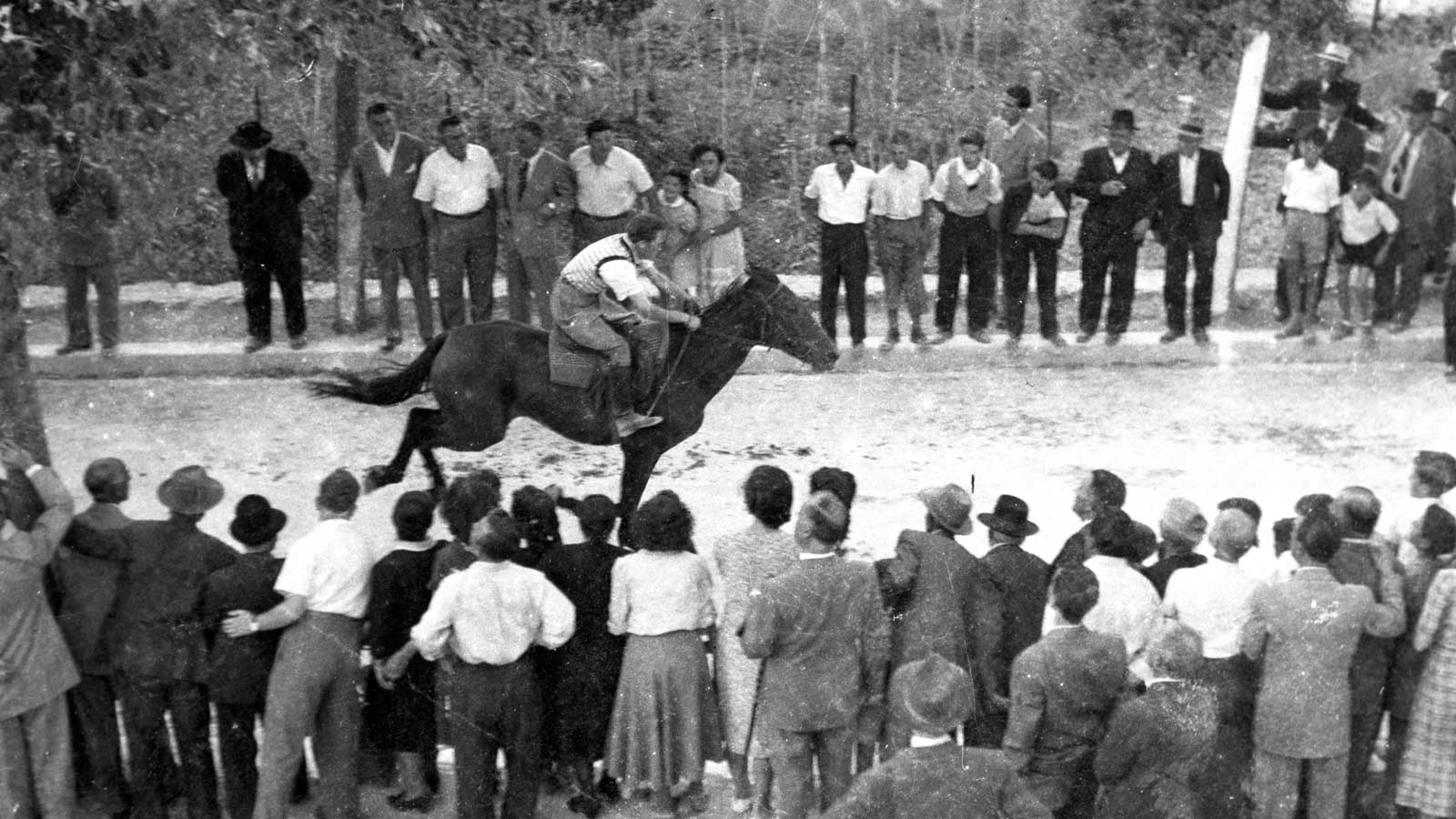
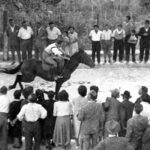
In earlier editions of the feast, the festive programme also included a horse race, remembered today through photographs and film footage from the 1950s. The competitors were mainly men from the pastoral world: horsemen who had perfected their riding skills while working in the livestock enterprises of the Roman Campagna, where the horse was an indispensable working companion. Watched by the entire community gathered along the route, the race brought together the time of celebration and that of everyday work, turning the patronal feast into an occasion for displaying and recognising the skills characteristic of a pastoral society of livestock owners and herders.
Festive March
Città di Montorio al Vomano Band, sounds of the procession and of the faithful accompanying it.
Fano Adriano (TE), 14 February 2026.
Recording by Emanuele Di Paolo.
Don Nicola Jobbi Study Centre Archive.
Fano Adriano (TE), 14 February 2026.
Recording by Emanuele Di Paolo.
Don Nicola Jobbi Study Centre Archive.
Listen to the track

The Shepherds’ Saint
The Statue of Saint Valentine
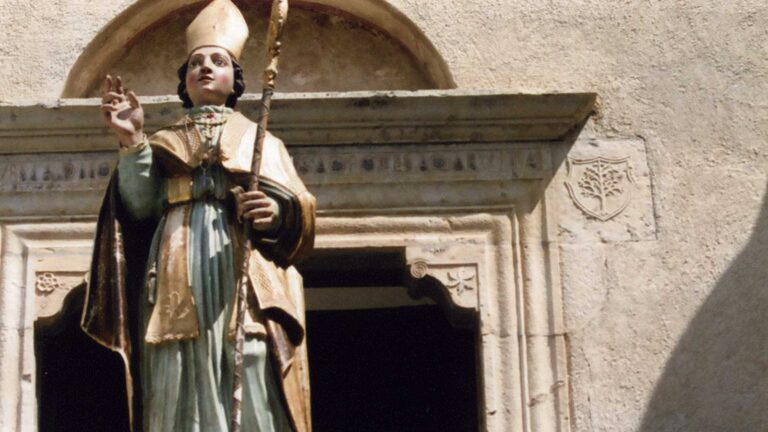
The polychrome wooden statue of Saint Valentine in front of the façade of the parish church during the summer feast.
Photo by Luigi Guerrieri,
Fano Adriano (TE), 29 August 2022,
Guerrieri Archive.
Photo by Luigi Guerrieri,
Fano Adriano (TE), 29 August 2022,
Guerrieri Archive.

The Shepherds’ Saint
The February Mass
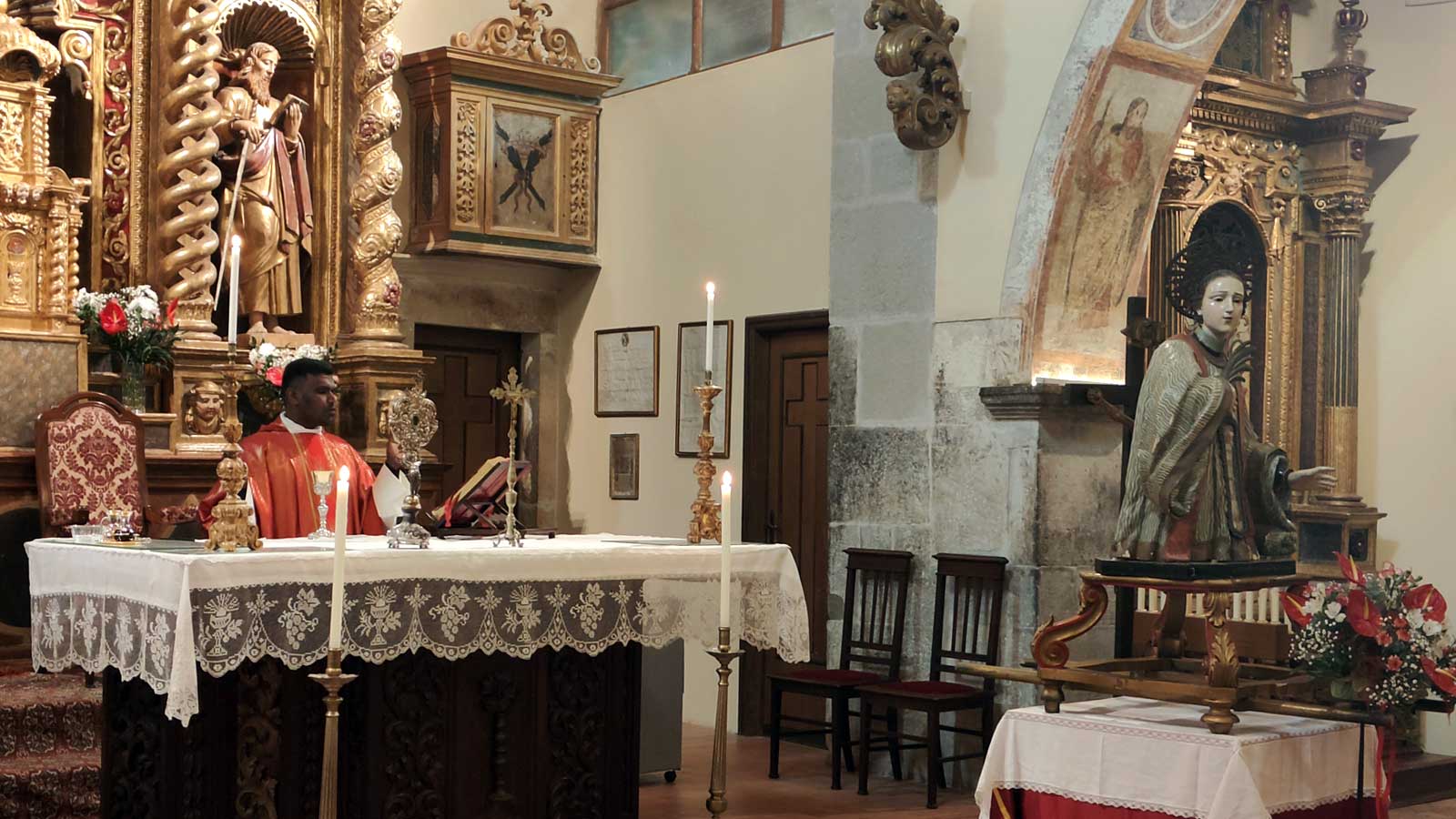
The Eucharistic celebration in the Church of Saints Peter and Paul, with the statue of Saint Valentine beside the altar; the red vestments are those traditionally worn for the feast of a martyr.
Photo by Emanuele Di Paolo,
Fano Adriano (TE), 14 February 2026,
Don Nicola Jobbi/Bambun Study Centre Archive.
Photo by Emanuele Di Paolo,
Fano Adriano (TE), 14 February 2026,
Don Nicola Jobbi/Bambun Study Centre Archive.
The Shepherds’ Saint
The Procession
The bearers carry the statue of the saint on their shoulders along a narrow street in the village during the procession of the summer feast.
Photo by Luigi Guerrieri,
Fano Adriano (TE), 27 August 2017,
Guerrieri Archive.
Photo by Luigi Guerrieri,
Fano Adriano (TE), 27 August 2017,
Guerrieri Archive.
The Shepherds’ Saint
In the Square
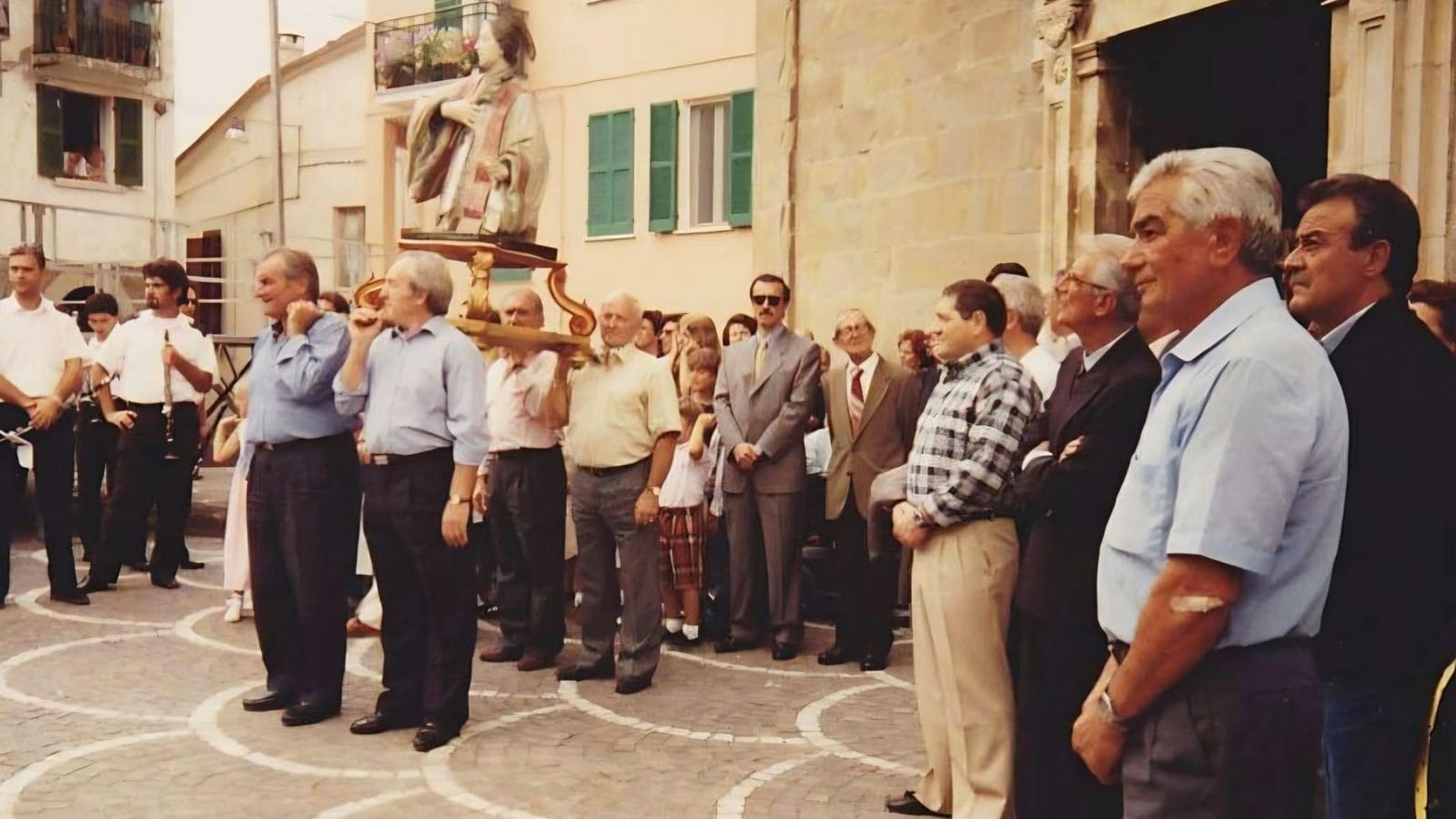
The statue of Saint Valentine in the square outside the Church of Saints Peter and Paul during the late-summer procession; to the left are the band musicians, with the community gathered around them.
Photo by Berardino Nisii,
Fano Adriano (TE), 25 August 1996,
Nisii Archive.
Photo by Berardino Nisii,
Fano Adriano (TE), 25 August 1996,
Nisii Archive.
The Shepherds’ Saint
The Horse Race
A moment from the horse race once held as part of the feast, with the crowd gathered along both sides of the road to watch.
Photo by Silvino Franciosi,
Fano Adriano (TE), 1950s,
Franciosi Family Archive and Don Nicola Jobbi/Bambun Study Centre Archive.
Photo by Silvino Franciosi,
Fano Adriano (TE), 1950s,
Franciosi Family Archive and Don Nicola Jobbi/Bambun Study Centre Archive.
Watch the video
Scenes from the Feast
Historical footage of the Feast of Saint Valentine documenting the procession, the horse race and the convivial gatherings that accompanied the celebrations.
Fano Adriano (TE), September 1955.
Footage by Leonardo Riccioni, Riccioni Collection, “Melchiorre Dèlfico” Library/Don Nicola Jobbi Study Centre.
Fano Adriano (TE), September 1955.
Footage by Leonardo Riccioni, Riccioni Collection, “Melchiorre Dèlfico” Library/Don Nicola Jobbi Study Centre.
Cultural transmission and protection
The Feast of Saint Valentine continues to attract strong community participation. Celebrated twice a year—on 14 February and on the last Sunday of August—it remains a powerful source of community cohesion in Fano Adriano. During the summer months in particular, the village comes alive again, and many people return specifically for the occasion, reuniting with relatives, fellow villagers and descendants of the old families traditionally engaged in transhumant pastoralism. In a community affected by depopulation, like many mountain villages, the feast acts as a periodic ritual of reunion, renewing the bonds between those who have remained and those who have moved away. However, today only one pastoral farm remains, still taking its livestock to the mountain pastures in summer.
An important role in transmitting this shared memory is played by those who have documented the feast over the decades. As early as the mid-twentieth century, Fano Adriano photographer Silvino Franciosi captured moments of the celebration and the horse race through his lens. At the same time, Leonardo Riccioni, a descendant of one of the village’s livestock-owning families, began in the early 1950s an extensive film documentation of life on his family farm at the Casali della Pallavicina and of the summers spent in his home village, devoting particular attention to the Feast of Saint Valentine. More recently, photographer Luigi Guerrieri has carefully documented the patronal feast over the past decade, in both its winter and summer celebrations, while Berardino Nisii, himself a custodian of many of the village’s memories, has preserved a photographic record of the feast spanning the last fifty years.
An important role in transmitting this shared memory is played by those who have documented the feast over the decades. As early as the mid-twentieth century, Fano Adriano photographer Silvino Franciosi captured moments of the celebration and the horse race through his lens. At the same time, Leonardo Riccioni, a descendant of one of the village’s livestock-owning families, began in the early 1950s an extensive film documentation of life on his family farm at the Casali della Pallavicina and of the summers spent in his home village, devoting particular attention to the Feast of Saint Valentine. More recently, photographer Luigi Guerrieri has carefully documented the patronal feast over the past decade, in both its winter and summer celebrations, while Berardino Nisii, himself a custodian of many of the village’s memories, has preserved a photographic record of the feast spanning the last fifty years.
OTHER ASSETS IN THE SAME MUNICIPALITOTHER ASSETS IN THE SAME MUNICIPALITY

Crossed voices
Il canto a “vatocco” a Cerqueto

We, the pilgrims
The almsgiving of Saint Anthony the Abbot in Fano Adriano

In Celebration
Bells and bell ringers in Fano Adriano
From Relic to Relic
The Feast of Saint Giles the Abbot in Cerqueto